Why Do Fables Use Animals? The Psychology and Folklore Behind Anthropomorphic Tales
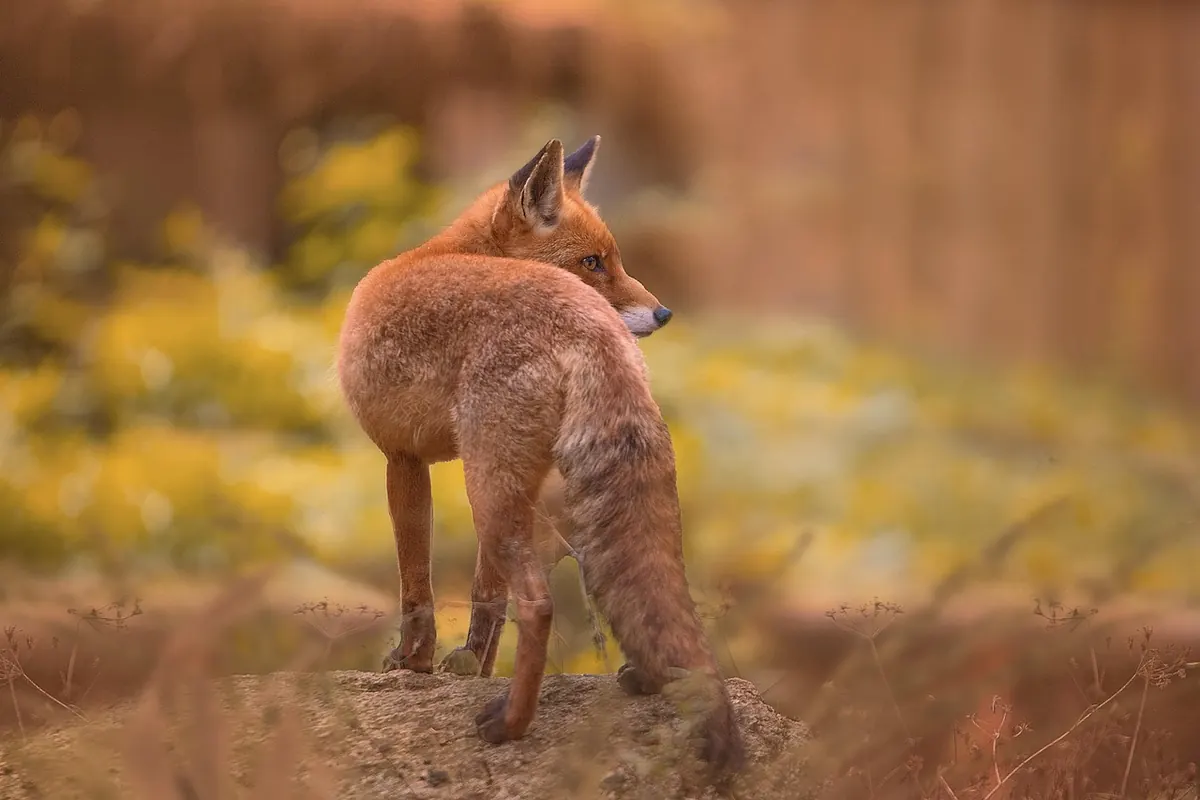
Ask a room of adults to recall a fable and almost nobody describes a person. They describe a tortoise plodding past a hare, a fox turning up its nose at grapes, a lion tangled in a net with a mouse nearby. The animals are not decoration. They are the reason the story is still in the room at all.
That is worth understanding, because the same mechanism that kept these tales alive for centuries can work on you now — as comfort, as perspective, as a way of seeing your own week more clearly.
Why a Fox Can Say What a Neighbour Cannot
Fables use animals partly because animals are safe to watch. A story about a mean-spirited shopkeeper invites you to argue. A story about a magpie that cannot stop collecting shiny things invites you to laugh — and then, quietly, to recognise yourself. The animal gives you somewhere to stand while the truth arrives.
Animals also arrive pre-loaded. One word does the work of a paragraph of description. Fox brings cunning and hunger; lion brings authority; mouse brings smallness and overlooked courage; ass brings stubbornness. The storyteller can skip the introductions and get straight to the turn of events, which is the part that matters.
And because these characters are types rather than individuals, the pattern is easier to see. You are not distracted by a childhood, a job, a particular accent. You are looking at the shape of a behaviour.
How Anthropomorphism Works on the Brain
Human attention is tuned to creatures. We read faces, follow gazes and guess at intentions almost without deciding to — a habit that is useful for living alongside other people and impossible to switch off. Give a story an animal with a voice and a motive and the same machinery hums into life. We feel for the crow. We want the mouse to succeed.
The useful part is the double knowledge underneath. Somewhere in the back of your mind you know perfectly well that foxes do not hold grudges about grapes. That knowledge stops the story feeling like an accusation. You can be moved and still keep your defences down.
A hare, a tortoise and a finish line. Three sentences of scene, one uncomfortable truth about steady work and early confidence.
Notice what the animals did there. They made an abstract idea — consistency beats talent when talent is careless — into something you can see.
A Lineage Older Than Print
Beast fables are one of the oldest storytelling forms we have. Aesop's tales were told in ancient Greece and have been retold ever since. The Indian Panchatantra, a collection of animal stories used to teach good sense, travelled into Persian and Arabic as the tales of Bidpai, then into medieval Europe. Reynard the Fox became a beast epic of his own, sly and unrepentant. Anansi the spider carried stories from West Africa across the Atlantic, and Brer Rabbit picked up the thread. La Fontaine turned many of the old plots into French verse in the seventeenth century.
What is striking is not the variety but the repetition. The same handful of plots — the boast that fails, the kindness repaid, the trick that rebounds — turn up across continents and languages. Animals were the carrier bag that made the journey possible.
Why the Story Sticks
Fables are built for memory, and memory is built on images, not arguments.
- Concrete nouns. A pitcher, a bunch of grapes, a bone. Nothing abstract to hold on to, and everything to picture.
- One turn. Almost every fable has a single reversal: the slow one wins, the strong one needs help.
- Repetition with rhythm. The three attempts, the two companions. Repetition is how a story becomes sayable.
- The moral as a lid. A closing line seals the tale and gives it a handle you can carry away.
The proof is in the language. "Sour grapes", "a wolf in sheep's clothing", "the lion's share" — these are not scraps of dead literature. They are phrases people still use in ordinary conversation, which is what a very successful story looks like after two thousand years.
Where the Comfort Comes From
For a reader looking for steadiness, the animal frame does several things at once.
- Distance. You can examine jealousy through a fox without having to confess to any.
- Scale. A fable is short. On a hard day, short is the difference between reading something and reading nothing.
- Consequence rather than instruction. Fables rarely wag a finger. They show what followed, and let you draw the line yourself.
- Continuity. The same stories have been read by tired, worried people for a very long time. There is comfort in that company.
That last point matters. Fables assume that human behaviour repeats, which means it can be noticed and, if you choose, changed. A story about a boastful frog does not tell you to be humble. It simply shows you the frog, mid-leap, and leaves the rest to you.
If you are using reading as part of looking after your mental health, treat it as one gentle support among others rather than a cure. If low mood or anxiety persists, speak to your GP or another qualified professional.
Reading a Fable for Perspective: A Short Method
- Choose a short one. Aesop is the easiest starting point; many versions run to fewer than two hundred words.
- Read it twice. Once for the story, once for the turn. The second reading is where the meaning usually sits.
- Name the animal quality. Say out loud what the creature stands for: pride, patience, greed, loyalty.
- Swap in a situation, not a person. Start with yourself, or with a decision you are still chewing over.
- Keep the consequence, not the moral. What actually happened as a result? That is the part worth remembering.
- Write one line. A single sentence you would repeat to a friend. If you cannot write it, the story has not finished working on you yet.
One Story, One Line
Pick a fable you half-remember. Read it before bed, write your single line, and carry that line for a week. Notice where it fits — the meeting where confidence outran preparation, the small kindness that turned out to matter. The practice is not complicated, and it does not need to be. Animals have been doing this work for us for a very long time: they make the lesson light enough to pick up, and specific enough to keep.
Photo: salofoto / Pixabay