British Folklore for Wellbeing: A Beginner's Guide to Local Legends and Nature Connection
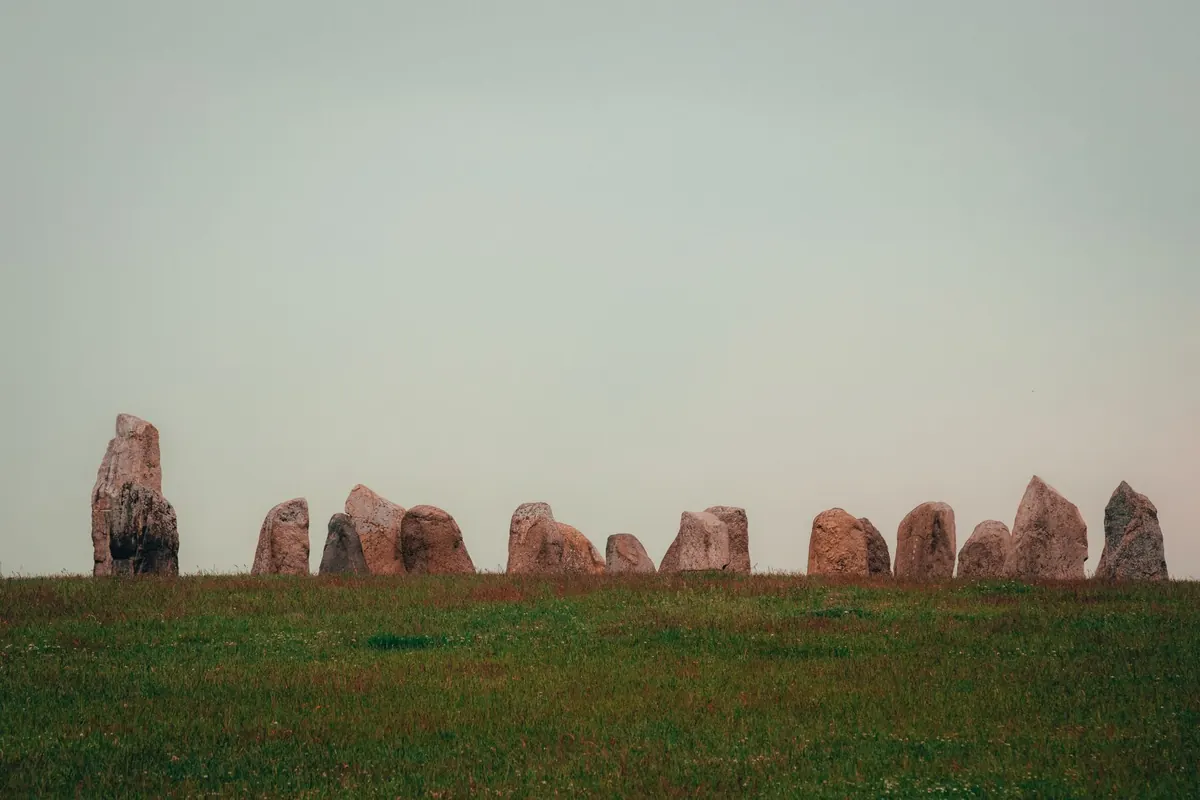
Stand at a village pond at dusk, or on a ridge where the map gives you a name like Grim's Ditch, and you are standing inside a story. British folklore is not a shelf of dusty curiosities. It is a set of local habits of attention: this well is said to heal, that hill belongs to a smith, the first swallow means the season has turned.
It pairs unusually well with wellbeing, not because a tale can cure anything, but because it gives your attention somewhere to land. Place, weather, season, and the people who walked the same path before you. You do not have to believe any of it. Curiosity is enough.
Why old stories sit well with a modern mind
Folk tales are short, concrete and unhurried. They rarely explain themselves. A woman meets a seal who takes off her skin. A smith shoes a horse for a coin left overnight. That is all you get, and your imagination does the rest — precisely the sort of gentle, absorbing work that quietens a churning head.
There is also the matter of belonging. Knowing that a stone has a name, or that a lane is said to be haunted by a dog, changes a walk from exercise into a relationship with a place. You notice more: the shape of the land, the smell of the hedge, the direction of the water. Over time that noticing becomes a habit, and the habit is the point.
None of this replaces proper care for your mental health. If you are struggling, speak to your GP or a qualified professional. Folklore is a companion to ordinary wellbeing, not a treatment.
Finding the folklore on your doorstep
You do not need a haunted castle. Most parishes have something: a holy well, a boundary stone, a tree with a name, a pub called The Dragon, a field called Dead Man's Acre. Start with what is nearest.
- Maps. Read the names on an Ordnance Survey map as if they were titles of stories. Wells, crosses, barrows, "puck", "grim" and "white lady" are all clues.
- The local studies library. County folklore collections, old guidebooks, parish magazines and oral history recordings are usually held there, and staff are used to curious visitors.
- Museums and churchyards. Church guides often preserve local legends; so do small museums. Look for carved figures, marks on doors, oddly placed stones.
- Local history and folklore societies. One meeting can hand you a dozen stories, plus the version your neighbours actually tell.
- People. Ask older residents what children were warned about, and where. The answers are often more vivid than anything in print.
Keep a note on your phone or in a small notebook. A story recorded the day you hear it stays with you; a story half-remembered does not.
Five legends to begin with
Wayland's Smithy, a Neolithic long barrow on the Ridgeway in Oxfordshire, is said to be the forge of a legendary smith. Leave a horse with a coin overnight and the tale promises it will be shod. A good first visit: a real ancient monument, a real walk, a story you can hold in your hand.
Herne the Hunter is the antlered figure said to haunt Windsor Great Park, and he appears in Shakespeare's The Merry Wives of Windsor. The story has grown and changed over centuries, which is worth remembering: folklore is not fixed. Every teller edits it.
The Lambton Worm belongs to County Durham. A young heir hooks a strange worm from the River Wear, throws it down a well, and years later finds it grown enormous and able to rejoin itself when cut. Grim, memorable, and tied to real bends in a real river.
Black Shuck is the great black dog of East Anglia, said to appear with flaming eyes. Accounts of a terrifying dog in the churches at Bungay and Blythburgh in 1577 are still repeated locally, and you can stand in the places they describe.
Selkies are the seal people of Orkney, Shetland and the Hebrides: seals who shed their skins to walk on land, and are bound if somebody hides the skin. Beautiful, melancholy stories from a coastline where seals are constant company.
Reading the year, not just the map
British folklore has a calendar as well as a map. Some of it is old, some of it was revived in living memory, and all of it is a decent excuse to go outside.
In January, apple trees in several counties are wassailed: cider poured at the roots, noise made to wake the orchard. In May, well dressings appear in Derbyshire villages, pictures made from petals pressed into clay. Midsummer brings hilltop fires and early walks; harvest brings corn dollies and the last sheaf; late October turns us towards winter, when telling ghost stories by candlelight feels natural rather than contrived.
Borrow the pattern without borrowing the belief. Choose four points in the year and mark each one outdoors, whatever the weather. That alone gives a year a shape.
A simple story walk
Try this with a local legend, or any place name that intrigues you. Allow about an hour.
- Choose one story and one location. Read the shortest version you can find, so you are not overloaded.
- Walk there without headphones, and notice three things you would normally miss.
- Sit for ten minutes and tell the story to yourself, silently or aloud, in your own words.
- Ask one question of the place: why here? Why a well, a boundary, a river bend?
- Write two or three sentences when you get home. Not a report — just what you noticed.
Do that once a fortnight for a season and you will have something more useful than a list of facts: a handful of places that feel like yours.
Begin where you are
Pick the nearest named well, hill, stone or oddly named field. Find one paragraph about it. Walk there this week, in ordinary shoes, and stay ten minutes longer than you think you need to.
Then tell one person what you found. Folklore survives by being passed on, and that is the whole practice: attention, place, and a story you hand to somebody else. Keep it gentle, keep it local, and let the landscape do most of the work.
Photo: Philipp Deus / Pexels